


Picture this: you moved to Toronto eighteen months ago. You spent your savings, maybe took out a loan, and finally opened your own business — a restaurant, a beauty salon, an accounting practice, a small repair shop. You did everything that felt “right.” You got a logo made. You put up a sign. You even paid someone to build you a website.
And yet, when people search for exactly what you offer, you’re nowhere. Meanwhile, a business three blocks away that’s been open for a fraction of the time is sitting right at the top of Google, with a full row of five-star reviews under its name.
That’s not bad luck, and it’s not because your business is worse. It almost always comes down to a handful of specific signals Google looks for — signals most newcomers were simply never told about, because nobody explains “how Google actually works” when you’re busy setting up a business number and figuring out Canadian tax forms. This guide walks through exactly what those signals are, in plain language, so you can start fixing them this week. This guide breaks down SEO for immigrant owned businesses Toronto into simple, practical steps you can start today.
SEO for Immigrant Owned Businesses Toronto: Why So Many Struggle to Get Found on Google
It’s rarely one big mistake. It’s usually four or five small gaps stacking on top of each other.
First, there’s the trust gap. A business that’s been in the neighbourhood for ten years has ten years of reviews, mentions, and customer history behind it. A new business has none of that yet, and Google leans heavily on that history when deciding who to show first.
Second, there’s the language gap. Many newcomer-owned businesses write their website content the way they’d naturally speak — which is warm and genuine, but often isn’t the way Canadian customers phrase their searches. Someone searching “best halal butcher near me” or “affordable immigration lawyer Toronto” is using very specific phrasing, and if your website doesn’t use that same phrasing anywhere, Google has a harder time connecting the two.
Third, a lot of newcomer business owners treat the website as the whole project and completely skip Google Business Profile — which, for local searches like “plumber near me” or “Persian restaurant Thornhill,” matters more than the website itself.
Fourth, information about the business name, address, phone number — often looks slightly different across Instagram, WhatsApp Business, the website, and Google. Small inconsistencies like “St.” versus “Street,” or an old phone number left on one platform, quietly tell Google the listings might not belong to the same business.
None of these are hard to fix. They just require knowing they exist.
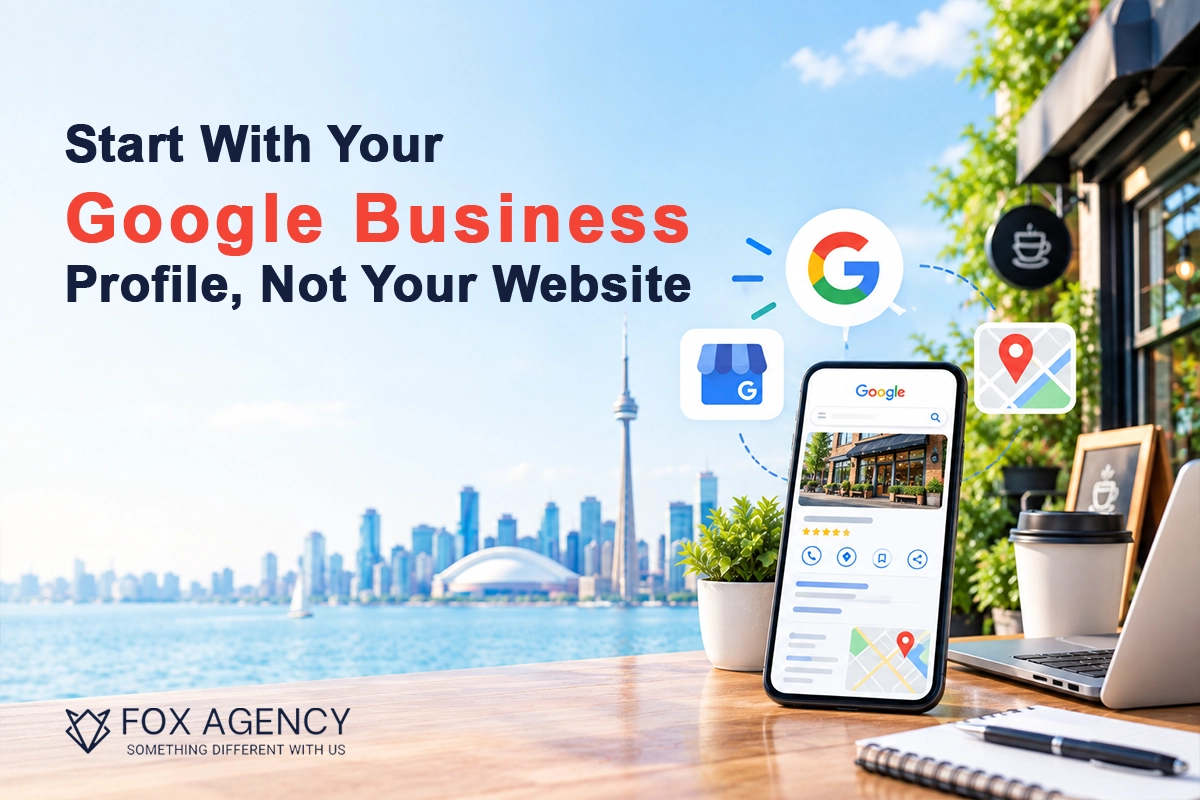
Start With Your Google Business Profile, Not Your Website
If you only have time to fix one thing this month, fix this one. For local searches — which is how most people find a nearby restaurant, clinic, salon, or shop — Google Business Profile (GBP) usually matters more than the website itself.
Claim and Verify It the Right Way
Search your business name on Google. If a profile already exists but says “claim this business,” that’s your first step — claim it, verify it (usually by postcard, phone, or video verification), and make sure you, not a random employee’s personal account, has full ownership access.If no profile exists, create one directly at Google Business Profile.
Choose Categories Carefully
This is where most people underperform without realizing it. Your primary category should be the most specific, accurate description of your core business — “Persian Restaurant” ranks for different searches than just “Restaurant. You can also add secondary categories for R&D Academy, a Toronto driving school we worked with, that meant listing both “Driving School” and “Driving Instructor” to capture more search variations.
Photos Do More Work Than You Think
Profiles with real, recent photos get significantly more calls and direction requests than profiles with none. Upload real photos of your storefront, your team, and your product or service — not stock images. If your business serves a specific cultural community, showing that authentically in your photos builds instant recognition and trust with the exact customers you want to reach.
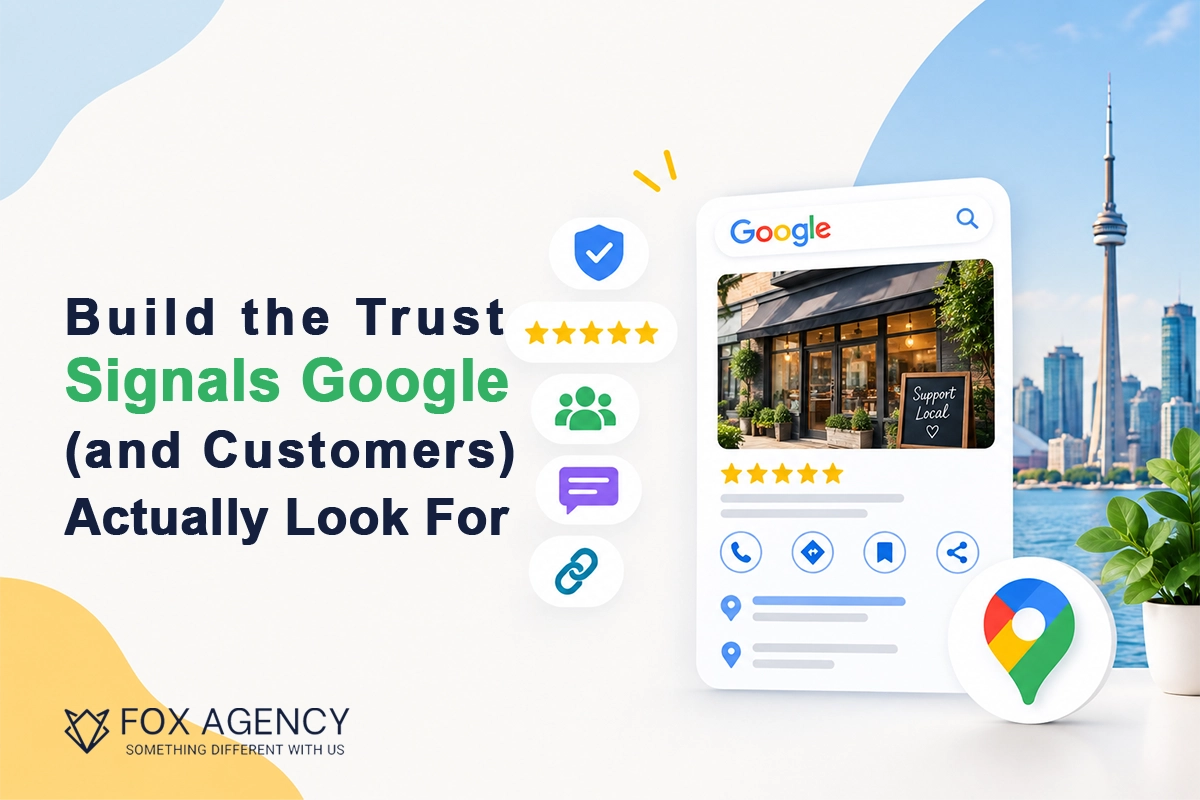
Build the Trust Signals Google (and Customers) Actually Look For
Getting Your First Reviews Without Feeling Pushy
Most newcomer business owners feel uncomfortable asking for reviews — it can feel like begging, especially if asking for favours isn’t something that felt natural back home. Reframe it: you’re not asking for a favour, you’re giving a happy customer an easy way to help a small business they already like.
The simplest method is a direct link. Google gives every business a shareable review link — find it in your GBP dashboard, turn it into a QR code, and put it on a receipt, a table tent, or a WhatsApp message you send after a job is done. Ask right after a good experience, not days later when the moment has passed.
NAP Consistency: The Small Detail That Quietly Kills Rankings
NAP stands for Name, Address, Phone number. Google cross-checks your NAP across the entire internet your website, Google Business Profile, Instagram bio, WhatsApp Business profile, Yelp, and any directory you’re listed on. If even one of these has a typo, an old suite number, or a disconnected phone line, it weakens the trust signal for all of them. Before doing anything else, write your business name, full address, and phone number exactly once, then copy-paste that exact version everywhere. Never retype it from memory twice.
List Your Business on Toronto-Specific Directories
Beyond Google, getting listed on a handful of relevant directories builds additional trust signals. Depending on your industry, this could include Yelp, BlogTO’s business listings, the Toronto Region Board of Trade directory, or community-specific platforms like Persian, Filipino, South Asian, or Caribbean business associations active in the GTA. These aren’t just for traffic — each one is another place confirming, in Google’s eyes, that your business is real and consistently described the same way.
Write Content That Speaks to Your Real Customers

Should Your Website Be Bilingual?
If a meaningful portion of your customers search in a language other than English, a bilingual website can genuinely — help but only if it’s done properly. A full, separate translated version of each page, with its own URL and its own meta title and description, works far better for SEO than a single page with two languages mixed together, or worse, a machine-translated version nobody proofread. If you’re not ready for a fully bilingual site yet, even one well-written page in your community’s language, clearly linked from your homepage, is a solid starting point.
Answer Real Questions
The most useful content isn’t clever — it’s specific. Think about the actual questions your customers ask you in person, on the phone, or over WhatsApp before they book or buy. “Do you accept walk-ins?” “Is parking available?” “Do you deliver to North York?” “What documents do I need for my first visit?” Each of these is a real search phrase somebody is typing into Google right now. A short blog post or FAQ page answering each one, in your own natural voice, does more for your visibility than generic “About Us” copy ever will.
On-Page SEO You Can Do Yourself This Week
These fundamentals are at the core of SEO for immigrant owned businesses Toronto, and none of them require a developer.
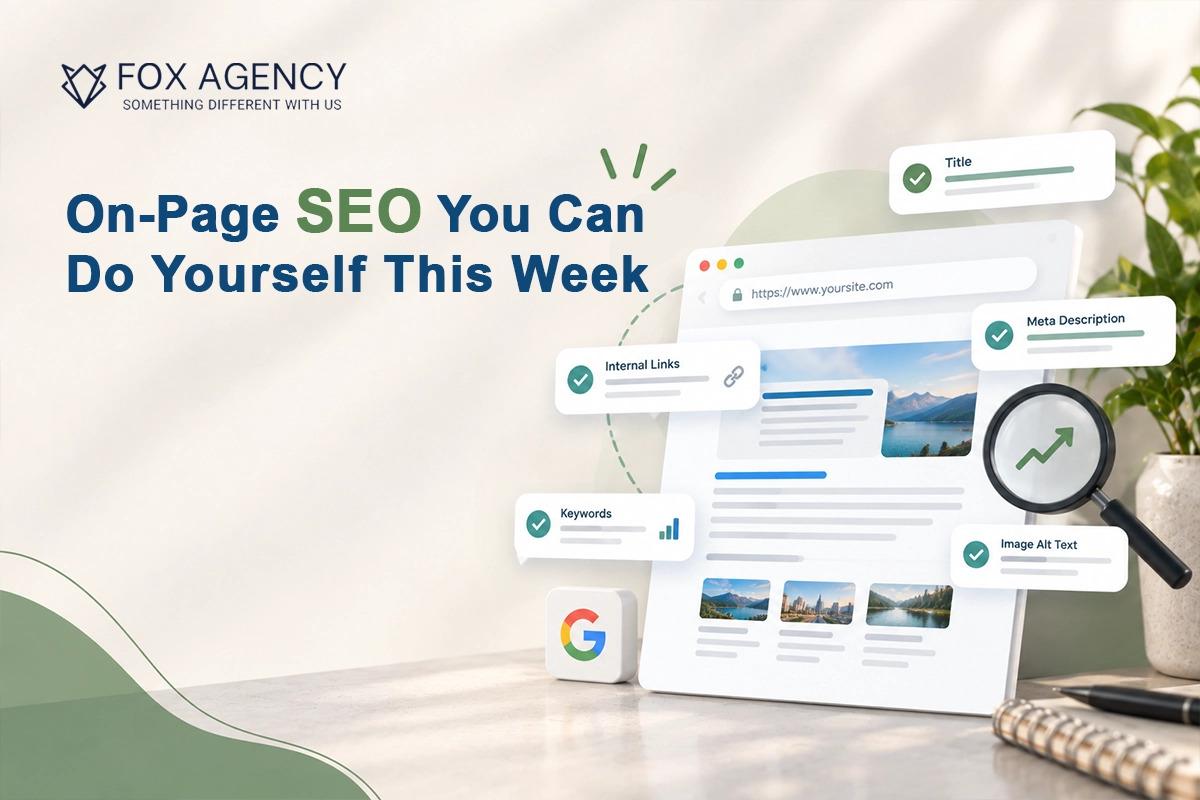
- Page titles: every page needs a unique title that includes what you do and where “Custom Tailoring in North York | [Business Name],” not just “Home.”
- Headings: use one clear H1 per page, with H2s that break the page into logical sections a person can scan.
- Image file names and alt text: rename image files before uploading (
halal-butcher-thornhill.jpg, notIMG_4821.jpg), and add a short, honest description in the alt text field. - Mobile speed: most of your customers are finding you on a phone. Run your site through Google PageSpeed Insights and fix anything flagged as a major issue — slow load times cost you customers before they even see your content.
- Internal links: link your service pages to your blog posts and back, so Google understands how your site is organized.
Common Mistakes New Business Owners Make

- Buying reviews or asking family members to leave reviews from outside Toronto —Google detects unusual review patterns and can suppress or remove your entire profile.
- Leaving Google Business Profile unclaimed or unmanaged for months after opening.
- Using a different address format (or an old location) on Instagram than on the website.
- Copying website text from a competitor “as a starting point” — this can actively hurt rankings, not just look unoriginal.
- Treating the website as a one-time project instead of something that gets small, regular updates.
A Simple 30-Day SEO Starter Plan
Week 1: Claim and fully complete your Google Business Profile — categories, hours, photos, description.
Week 2: Audit your NAP across every platform and fix every inconsistency you find.
Week 3: Ask your last 10–15 happy customers for a Google review using a direct link. Week 4: Write one FAQ-style blog post answering the single question customers ask you most often.
Repeat weeks 3 and 4 every month after that, and the momentum compounds.

Frequently Asked Questions
Do I need a website if I already have a strong Google Business Profile?
Yes — GBP gets you found locally, but a website is where customers verify you’re legitimate and learn more before contacting you. The two work together, not instead of each other.
How long does it take to see results?
Local SEO improvements from Google Business Profile often show movement within a few weeks. Website content and rankings typically take two to four months to build momentum.
Is it worth paying for SEO as a brand-new business?
Paid help becomes worthwhile once you want a consistent content strategy or a technical audit of the website itself.
Should I focus on English or my community’s language first?
Start wherever your current customers are searching. If most of your business already comes from within your community, a well-written page in that language may bring faster results than English content targeting strangers.
The Bottom Line
Getting SEO for immigrant owned businesses Toronto right comes down to consistency, not a big budget or a marketing degree. None of this requires a marketing degree or a big budget — it requires consistency and a handful of details most newcomer business owners were simply never shown. Start with your Google Business Profile, keep your information identical everywhere, ask for reviews at the right moment, and write content that answers the real questions your customers already have. If you’d like a second pair of eyes on where your business currently stands, get in touch — we’re happy to take a look.