


Picture a business owner who decided a few months ago it is time to step up and make a website. They found a good designer, paid a fair price, and ended up with something clean and modern-looking. A few months later, they’re asking the same question that lot of owners eventually ask: “So why isn’t this site bringing in any customers?”
The answer is usually simpler than it seems. The site isn’t badly built it was just built to look good, not to work. A website that actually helps a business needs to get three things right at the same time: design that moves people toward action, SEO(Search Engine Optimization) that makes the site findable in the first place, and branding that builds enough trust for people to actually convert. If only one of those three is not solid enough, the rest of the effort tends to go to waste. This guide walks through all three, step by step, without the jargon.
Step One: Figure Out What Your Business Website Is Actually For
Most people jump straight to picking colors and templates. The question that actually matters comes first: what is this site supposed to do? Drive direct sales? Generate phone calls? Showcase a portfolio to land bigger clients?
Each answer changes the entire approach. If the goal is called, a “Get a Free Quote” button needs to be easy to find on every page, not buried on a Contact page. If the goal is direct sales, trust-building elements reviews, case studies, guarantees need far more attention than they’d otherwise get.
Alongside the goal, you need to know who you’re actually talking to. A women’s clothing store and industrial services company need completely different language of layout, and content. That decision has to happen before anyone opens Figma, not after.
Step Two: Design That Actually Moves People to Act
Good design isn’t just about looking polished it’s about making sure a visitor to your business website, knows exactly what to click without having to think about it. A few things that genuinely affect results:
- A clear path to action. From the moment someone lands on the site to the moment they call or buy, there shouldn’t be more than two or three clicks in between.
- Load speed. If a page takes more than a couple of seconds to load, a large amount of potential customers leave before they see anything at all. Tools like Google PageSpeed Insights will show you exactly where a page is slowing down.
- Mobile-first design. Most visitors are on their phones. It doesn’t matter how good the desktop version looks if the mobile version feels clunky or slow.

Visible trust signals. Real portfolio work, genuine client feedback, and clear contact information all tell a visitor this business is legitimate.
Step Three: SEO From Day One, Not as an Afterthought
SEO isn’t just writing blog posts a large part of it gets decided in how your business website is structured. Before a single page is designed, you need to know exactly what people are typing into Google when they’re looking for a business like yours. That research shapes what pages you build, what you title them, and even how your navigation menu is aligned. Google’s own SEO Starter Guide is a solid free reference if you want to go deeper on the technical side.
A few fundamentals to get right from the start:
- Each page should have exactly one main heading (H1) that includes that page’s target keyword.
- URLs should be short and readable, not strings of random numbers and characters.
- Images need proper file names and descriptive alt text.
- Related pages should link to each other logically a service page linking to a relevant blog post, for example.
None of this is complicated. But if it’s skipped at the start, adding it in later takes far more time and money than doing it right the first time.
Step Four: Branding Is More Than a Nice Logo
A lot of people think branding a business website just means a logo and a color palette. That’s a small piece of it it’s usually the first thing we untangle when clients come to us for design and branding work. Real branding means someone landing on your site immediately understands what kind of business you are and why they should trust it.
Three things need to line up for that to happen:
- Tone and voice. Are you speaking formally or casually? That tone has to stay consistent across every page.
- Visual identity. Colors, fonts, and photography style need to feel like one brand, not five different ones stitched together.
- A clear core message. One simple sentence that explains why this business is different. If you don’t have that sentence, your website’s visitor probably don’t either.
A site with unclear branding won’t convert visitors into customers, even if the design and SEO are both excellent because it never actually builds trust.
Step Five: Content Is the Site’s Heartbeat
A site that gets built once and never touched again isn’t attractive to Google. Search engines favor sites that get updated regularly and actually answer the questions real people are asking.
A blog section shouldn’t exist just to check a box. Every article should answer a real question your potential customers are already asking. If you sell web design services, articles about pricing, your process, or common client questions can bring in traffic and build trust at the same time.
The key is writing for the person reading it, not for an algorithm. If a Content stuffs with keywords for their own sake, It’ll tires readers out and search engines have gotten good at recognizing it, too.
How Long Does It Take (and What Does It Cost)?
A realistic business website project usually takes four to eight weeks from kickoff to launch, longer if the site includes e-commerce, custom features, or a large number of pages. Trying to rush this timeline can make a lot of problems and bugs in the final work
Cost varies more than most people expect, and the honest answer is “it depends” on a few concrete factors:
Number of pages and complexity. A five-page site with a contact form costs far less than a fifteen-page site with booking systems, e-commerce, or custom integrations.
Content preparation. Sites where the client already has photography, copy, and branding ready move faster and cost less than sites where all of that has to be created from scratch.
SEO scope. A site built with basic on-page SEO costs less upfront than one that includes keyword research, content strategy, and ongoing optimization.
Rather than chasing the cheapest quote, it’s worth asking any agency exactly what’s included design, SEO, content, and revisions before comparing numbers side by side. A price that looks low often means several of these pieces were left out entirely.
Common Mistakes That Waste Your Money
A surprising number of business website projects run into the same handful of problems:
- Building a site before doing any keyword research
- Choosing a design that looks great but loads slowly
- Skipping a content strategy for the blog entirely or skipping the blog altogether
- Letting the site’s tone, social media voice, and actual sales team feel like three different businesses
- Treating mobile as an afterthought during design
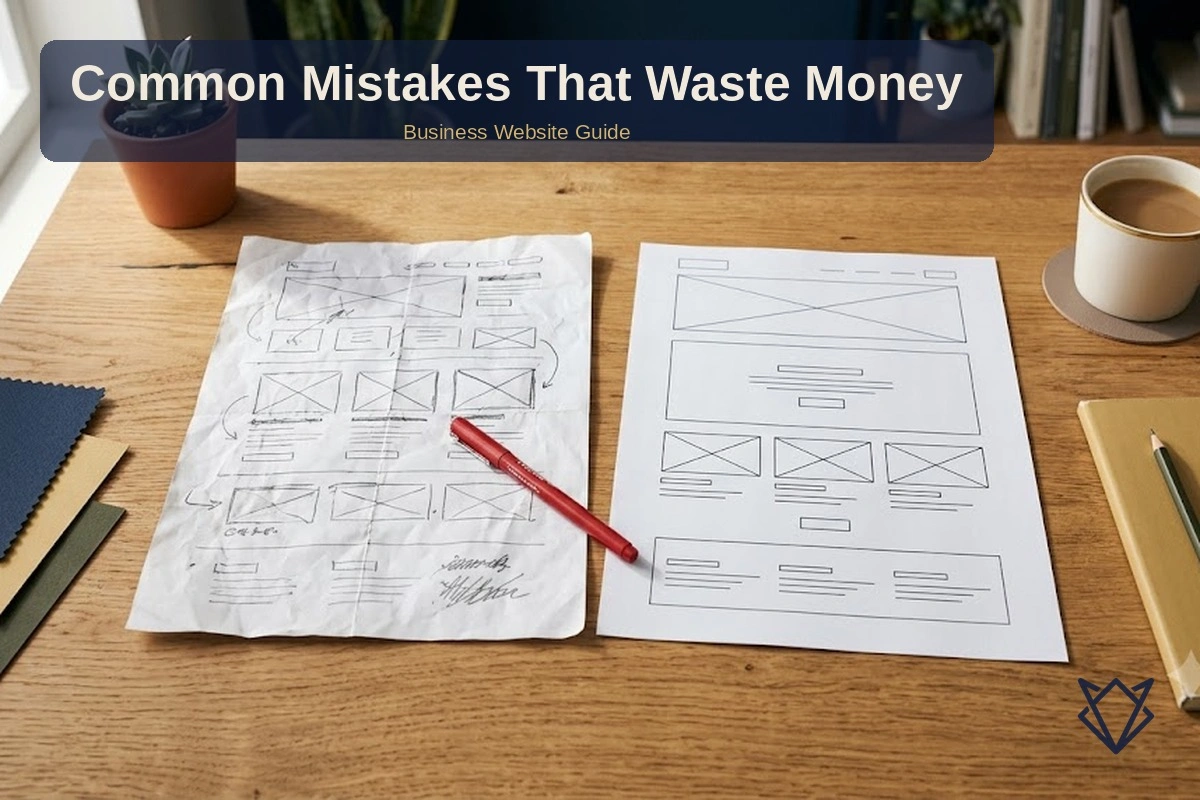
Any one of these on its own might seem minor. Stack a few together, and the result is a site that cost real money and produces nothing.
How Do You Know the Site Is Actually Working?
Launching your business website isn’t the finish line. A few numbers worth checking regularly:
- Real visitor engagement not just traffic, but how long people actually stay
- The percentage of visitors who turn into calls or sales
- Which keywords the site is currently ranking for (Google Search Console will show you)
- Page load speed, especially on mobile
These numbers tell you which parts of the site are pulling their weight and which parts need work.
The Bottom Line
A good business website is the result of one decision made well, not a one-time project checked off a list. Design, SEO, and branding need to be considered together from the very first meeting not handled separately and stitched together afterward. If you’re planning to build or redesign a site for your business, it’s worth working with a team that treats all three as one project, not three disconnected ones. If you’d like a second pair of eyes on your current site or your plans for a new one, get in touch and we’re happy to take a look.
How much does a business website cost?
Most small business websites cost between $2,000 and $10,000, depending on the number of pages, whether content and photography are ready in advance, and how much SEO work is included. Highly custom sites or e-commerce builds can run higher.
How long does it take to build a business website?
A straightforward business website typically takes four to eight weeks from kickoff to launch. Sites with e-commerce, custom features, or a large number of pages usually take longer, especially if content isn’t ready when the project starts.
Do I need a blog on my business website?
Not every business needs one, but most benefit from it. If potential customers search for answers before they buy pricing, comparisons, “how to” questions a blog is one of the most reliable ways to get found on Google before they ever contact you.
Can I build my own business website instead of hiring someone?
Yes, DIY builders like Wix or Squarespace work for very simple sites. For a business relying on the site to generate leads or sales, a professionally built site usually pays for itself through better design, SEO, and conversion things DIY templates rarely get right.
What’s the most common reason a new website doesn’t perform well?
Almost always, it comes back to SEO being treated as an afterthought instead of being built into the site from day one the exact mistake this guide opened with.